

Learn more
Know your bread.
How we choose our flour, how to store and rehydrate a loaf made without preservatives, and how to store and use our pizza dough at home.
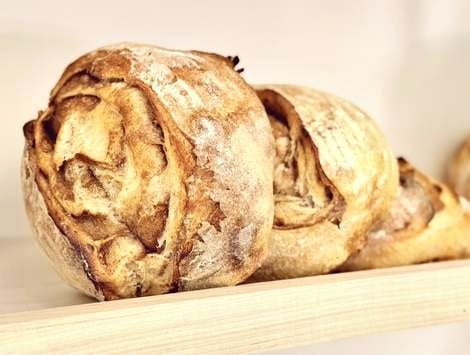
Store your sourdough
Counter for days, freezer for weeks, fridge for nothing — how to keep a loaf made without preservatives.
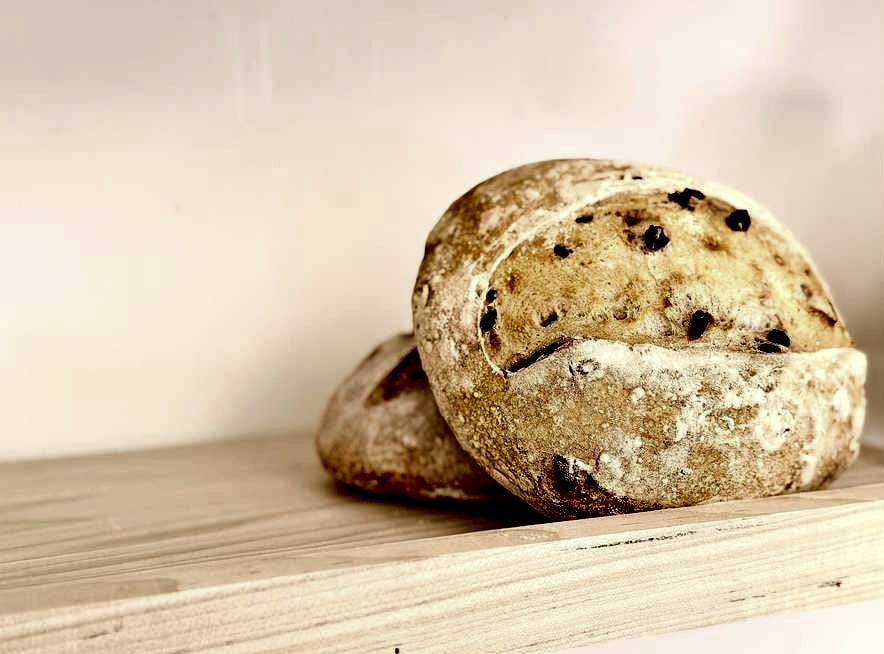
Rehydrate your sourdough
It isn’t stale, it’s dry. How to bring a loaf back with heat and a little water.
Store and use your pizza dough
Two balls, cold-proofed for 48 hours. How to get a proper crust from a home oven.
Our flour
The main ingredient. How we choose our flour determines the quality, flavor, texture and nutritional value of our bread.
We only source flour from certified organic and regenerative mills, and it will never be bleached, bromated or enriched. Most people know an organic label and what it means. But the other three are where the real difference lies.
- Organic
- Grown without synthetic pesticides, herbicides or fertilizers, from seed that isn’t genetically modified. Certified, audited, traceable to the farm.
- Unbleached
- Most white flour is treated with chlorine dioxide or benzoyl peroxide to whiten it and speed up aging. Ours isn’t. It ages naturally, which takes longer and keeps the flavor and the carotenoids that bleaching destroys.
- Unbromated
- Potassium bromate is added to industrial flour to strengthen dough and make it rise higher, faster. It’s banned in the EU, UK, Canada and much of the world, and still legal in the United States. You will never find it in our bread.
- Unenriched
- “Enriched” flour has had its bran and germ stripped away, then synthetic vitamins added back to replace what was lost. We’d rather keep the grain whole enough that nothing needs replacing.